
Shooting Stars in Liguria: Perseids and the August 2026 Eclipse

August is one of the best months to look up at the night sky in Liguria. In 2026 it was particularly memorable: the traditional Perseid meteor shower coincided with the solar eclipse of 12 August 2026, seen as a deep partial eclipse from Liguria.
For guests staying at Agriturismo I Due Ghiri, in the countryside around Calice al Cornoviglio, the Val di Vara offers a rural setting away from the brightest coastal towns. That makes it a useful base for stargazing not only during the Perseids but on clear nights throughout the year.
When are the Perseids visible in Liguria?
In Italy shooting stars are traditionally associated with the Night of San Lorenzo on 10 August, but the actual Perseid maximum shifts slightly from year to year. In 2026 the International Meteor Organization indicated a peak around 13 August, making the night of 12–13 August especially interesting.
The Moon was new on 12 August 2026, so moonlight did not interfere significantly with observing the meteors. Dark skies, low haze and as little artificial light as possible are still more important than any precise prediction of how many meteors you will see.
Why the Val di Vara works well for meteor watching
You do not need a telescope to watch a meteor shower. A broad view of the sky and a dark, safe location are more useful. The Val di Vara around I Due Ghiri is characterised by woods, hills and small villages rather than large urban areas.
Choose an open place with a good field of view, move away from direct lights and give your eyes at least 15–20 minutes to adapt to darkness. Looking repeatedly at a bright phone screen makes faint stars and meteors harder to see.
You do not have to stare at Perseus. Meteors can cross very different parts of the sky, so it is better to get comfortable and watch a wide area overhead.

What happened during the solar eclipse on 12 August 2026?
The same evening brought another astronomical event. The eclipse was total along a path crossing Greenland, Iceland and Spain, while Italy saw a partial solar eclipse. In Liguria the Sun was very strongly covered.
Using La Spezia as a reference, the eclipse began at about 19:29, reached its maximum around 20:22 and ended close to sunset. Totality was not visible from La Spezia or the Val di Vara.
Why the western horizon mattered in Val di Vara
At maximum eclipse the Sun was very low towards the west-north-west. In a hilly area such as the Val di Vara, ridges can hide the Sun before the astronomical maximum. For that event an open western horizon was therefore more important than simply choosing the darkest location.
The lesson is useful for future low-altitude astronomical events as well: check the observing point beforehand and avoid improvised journeys along isolated roads or trails around sunset.
How to observe a solar eclipse safely
Unlike shooting stars, a solar eclipse requires specific eye protection. Never look directly at the Sun without certified solar viewers. For a partial eclipse, eclipse glasses should comply with the ISO 12312-2 standard. Ordinary sunglasses are not sufficient.
Cameras, binoculars and telescopes also require properly mounted solar filters in front of the optics. NASA provides a useful solar eclipse safety guide.

From sunset to the Perseids: a night in Val di Vara
The 12 August 2026 combination was unusual: an eclipse around sunset followed, a few hours later, by a dark Moon-free sky near the Perseid maximum. After midnight is generally one of the best periods to watch the shower from northern mid-latitudes.
Stargazing does not need complicated equipment. A blanket or reclining chair, a warm layer even in summer, some water and a quiet location are often enough.
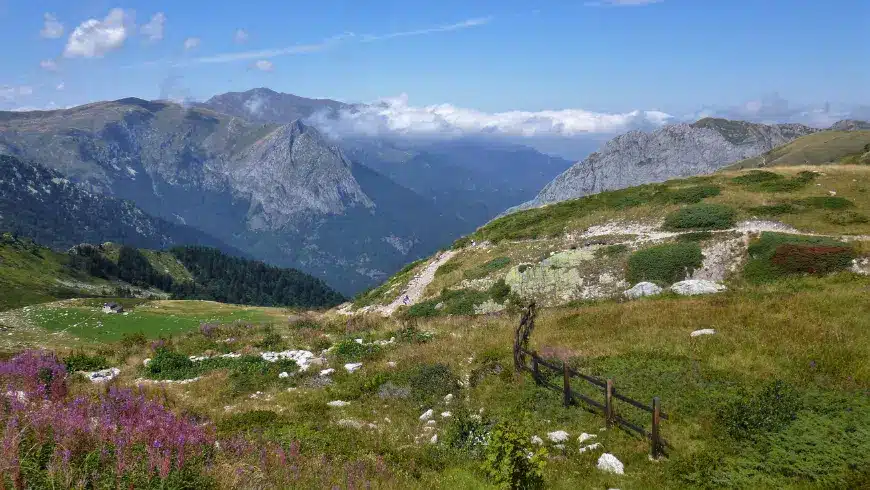
A different side of eastern Liguria
The sea and the Cinque Terre are often the first reasons for visiting eastern Liguria, but the inland valleys offer a very different experience. From the agriturismo you can spend the day enjoying our activities and excursions, discover small villages and return to the countryside for a quieter evening.
For a longer stay, explore our accommodation in Val di Vara, our guide to visiting the Cinque Terre from the agriturismo, or contact us through Reservations.
FAQ about shooting stars in Liguria
When is the best time to see the Perseids?
The shower is active for several weeks around July and August, with the strongest activity usually around 12–13 August. Check the annual forecast because the exact maximum changes slightly.
Do I need a telescope for shooting stars?
No. A dark location with a wide view of the sky is more useful than magnification. Give your eyes time to adapt to darkness.
Can normal sunglasses be used for a solar eclipse?
No. Direct solar observation requires certified eclipse viewers compliant with ISO 12312-2 or an appropriate indirect viewing method.


Comments and questions
Have a question or a useful tip to share? Leave a comment.